
Introduction
Staying fit and physically active is an important part of maintaining good health. Regular movement helps strengthen the muscles, support heart health, improve flexibility and maintain a healthy body weight. It can also improve mood, reduce stress and make everyday activities easier.
However, many people believe that getting fit requires an expensive gym membership, specialised equipment or several hours of exercise every day. This belief can make fitness seem difficult, especially for people with busy schedules, financial limitations or limited access to fitness facilities.
The truth is that you can improve your fitness without going to the gym. Walking, dancing, cycling, climbing stairs, gardening and performing simple exercises at home are practical ways to remain active. What matters most is finding activities you enjoy and making them part of your regular routine.
You do not have to change your entire lifestyle overnight. Small steps, repeated consistently, can help you develop healthier habits and improve your physical fitness over time.
Here are simple ways to stay fit and active without going to the gym.
1. Make Walking Part of Your Daily Routine
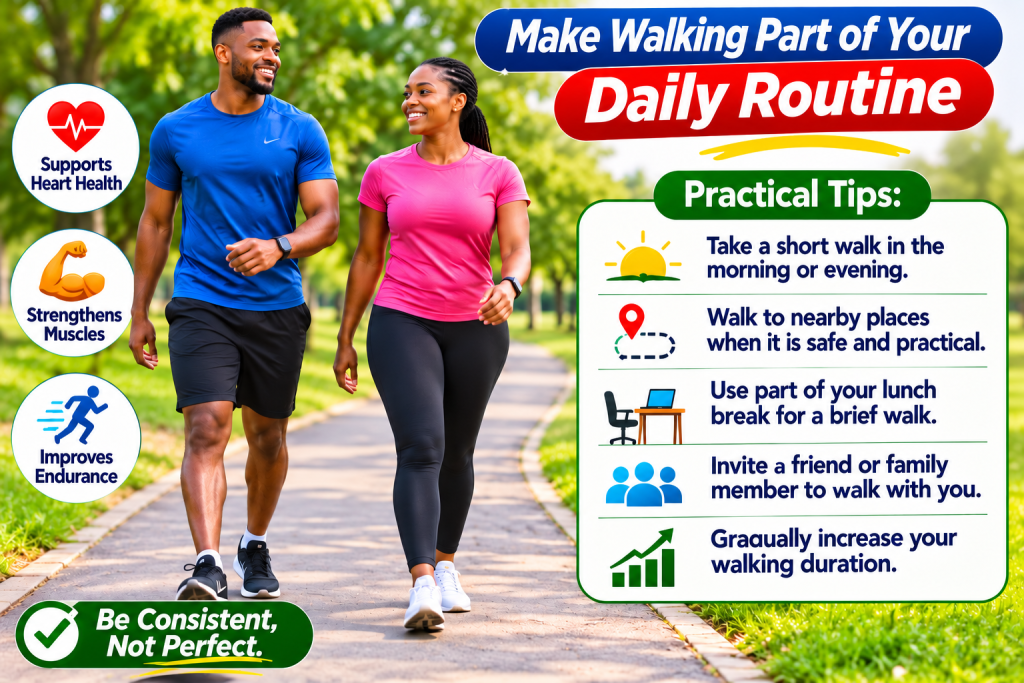
Walking is one of the easiest and most accessible forms of physical activity. It requires little or no equipment and can be performed by many people at different fitness levels.
Regular walking can support cardiovascular health, improve endurance, strengthen the muscles of the lower limbs and help maintain mobility. It can also provide an opportunity to spend time outdoors and clear your mind.
You do not need to begin with long distances. Start with a comfortable walk around your neighbourhood, workplace or nearby park. As your fitness improves, you can gradually increase your walking time or distance.
Practical tips:
- Take a short walk in the morning or evening.
- Walk to nearby places when it is safe and practical.
- Use part of your lunch break for a brief walk.
- Invite a friend or family member to walk with you.
- Gradually increase your walking duration.
Consistency is more important than walking a very long distance occasionally.
2. Try Simple Home Exercises
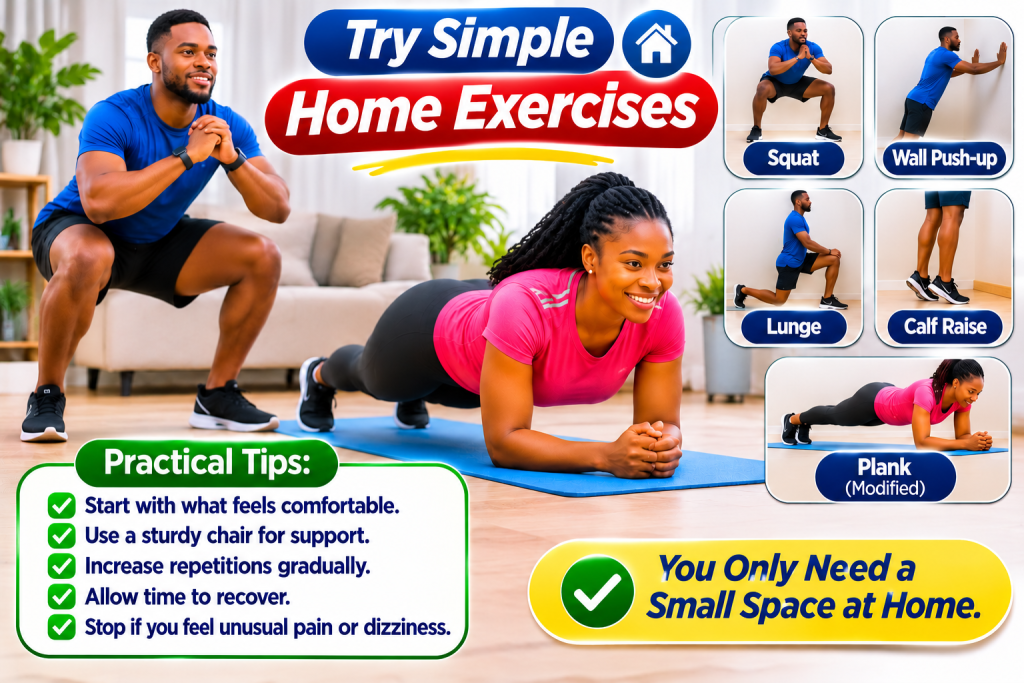
You can perform several effective exercises at home without purchasing expensive equipment. Bodyweight exercises use your own body as resistance and can help improve strength, balance and general fitness.
Examples include squats, wall push-ups, lunges, standing calf raises and modified planks. These exercises can be adjusted to suit different abilities and fitness levels.
For beginners, it is important to learn the correct movement technique before increasing the number of repetitions or difficulty.
Practical tips:
- Start with exercises that feel comfortable.
- Use a sturdy chair for support when necessary.
- Perform a few repetitions and increase gradually.
- Allow adequate recovery between demanding sessions.
- Stop if you experience unusual pain, dizziness or significant discomfort.
A small space in your living room or bedroom may be enough to complete a simple home exercise routine.
3. Use Dancing as a Form of Exercise
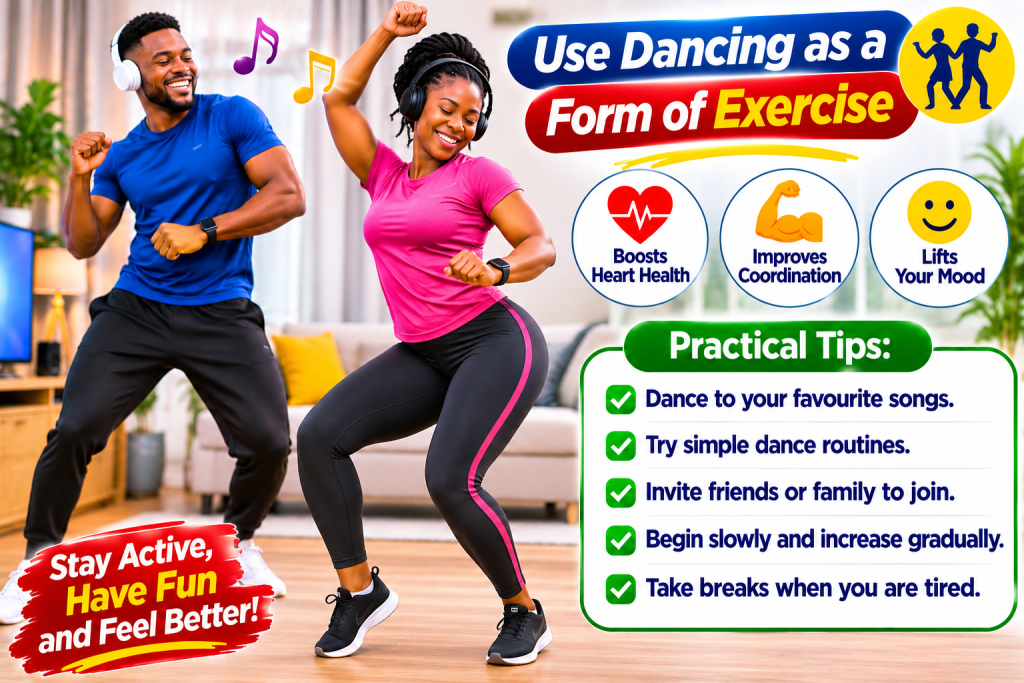
Dancing is an enjoyable way to remain physically active. It combines movement, coordination and rhythm while providing an opportunity to enjoy your favourite music.
Depending on the style and intensity, dancing can increase your heart rate, improve coordination and help develop cardiovascular endurance. It may also improve mood and reduce feelings of stress.
You do not need professional dance lessons or special equipment. Simply choose music you enjoy and move at a comfortable pace.
Practical tips:
- Dance to your favourite songs at home.
- Try simple dance routines.
- Invite friends or family members to join you.
- Begin slowly and increase the intensity gradually.
- Take breaks when you become tired.
The best exercise routine is often one you genuinely enjoy. Dancing can make physical activity feel less like a task and more like recreation.
4. Take Advantage of Everyday Activities
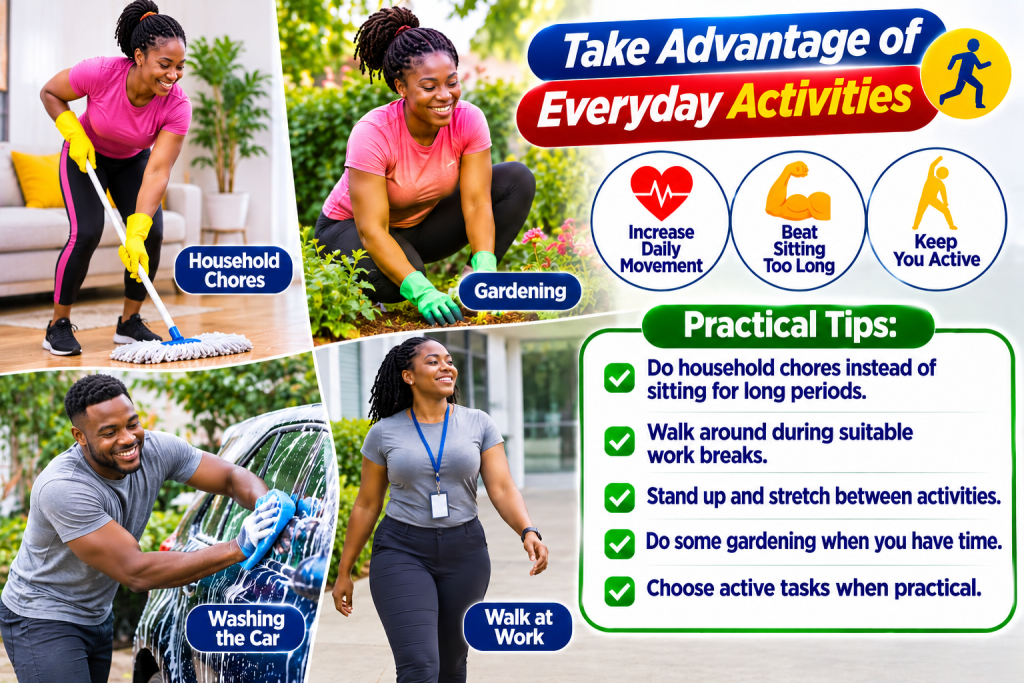
Physical activity does not always have to come from planned exercise sessions. Many everyday activities involve movement and can contribute to your overall activity level.
Cleaning, sweeping, washing the car, gardening, carrying light household items and walking around your workplace are examples of activities that keep the body moving.
Although these activities may not replace a complete exercise programme, they can help reduce prolonged sitting and increase daily movement.
Practical tips:
- Perform household chores instead of sitting for long periods.
- Walk around during suitable work breaks.
- Stand up and stretch between activities.
- Do some gardening when you have time.
- Choose active tasks when practical.
Look for simple opportunities to move throughout the day rather than waiting for a specific time to exercise.
5. Make Use of the Stairs
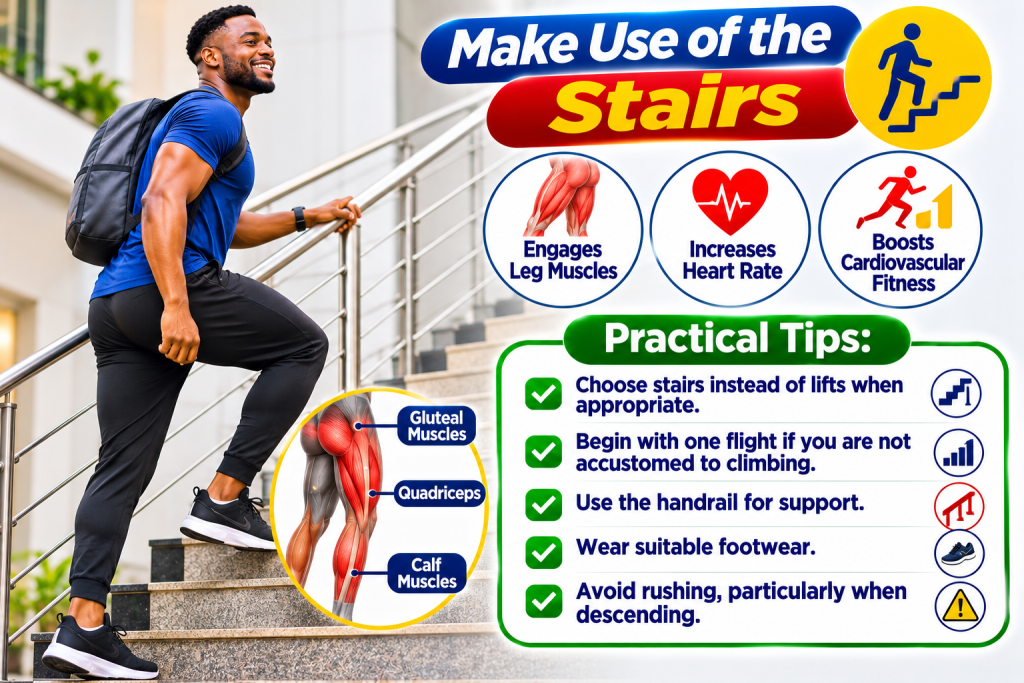
Climbing stairs is a practical way to increase physical activity, particularly when stairs are readily available.
It engages several muscles in the lower limbs, including the quadriceps, gluteal muscles and calf muscles. It can also increase heart rate and provide a cardiovascular challenge.
However, stair climbing may not be suitable for everyone. People with significant joint pain, balance difficulties, certain heart conditions or mobility limitations should consider safer alternatives and seek professional advice when necessary.
Practical tips:
- Choose stairs instead of lifts when appropriate.
- Begin with one flight if you are not accustomed to climbing.
- Use the handrail for support.
- Wear suitable footwear.
- Avoid rushing, particularly when descending.
Safety should always come before intensity. A comfortable and controlled pace is more beneficial than forcing yourself to climb quickly.
6. Try Cycling and Other Outdoor Activities
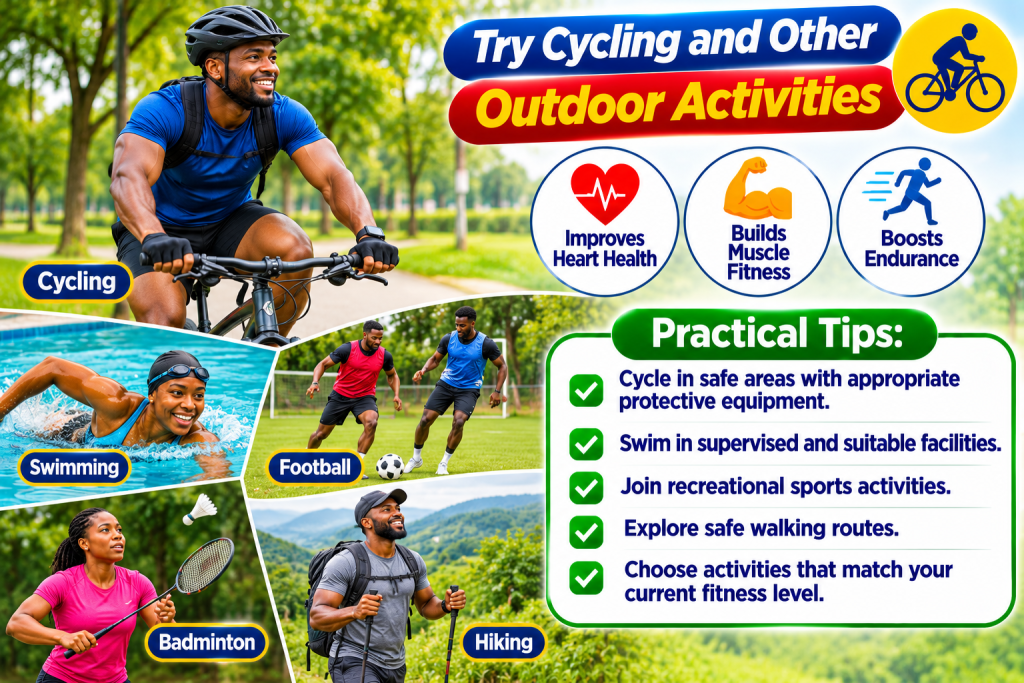
Cycling is another useful way to stay active without visiting a gym. It involves repeated movement of the lower limbs and can help improve cardiovascular endurance and muscular fitness.
Other outdoor activities, such as swimming, recreational football, badminton and hiking, can also provide opportunities for exercise.
Choosing activities that match your interests can make it easier to remain consistent.
Practical tips:
- Cycle in safe areas with appropriate protective equipment.
- Swim in supervised and suitable facilities.
- Join recreational sports activities.
- Explore safe walking routes.
- Choose activities that match your current fitness level.
Outdoor exercise can also provide a change of environment and make physical activity more enjoyable.
7. Create a Realistic Weekly Exercise Plan
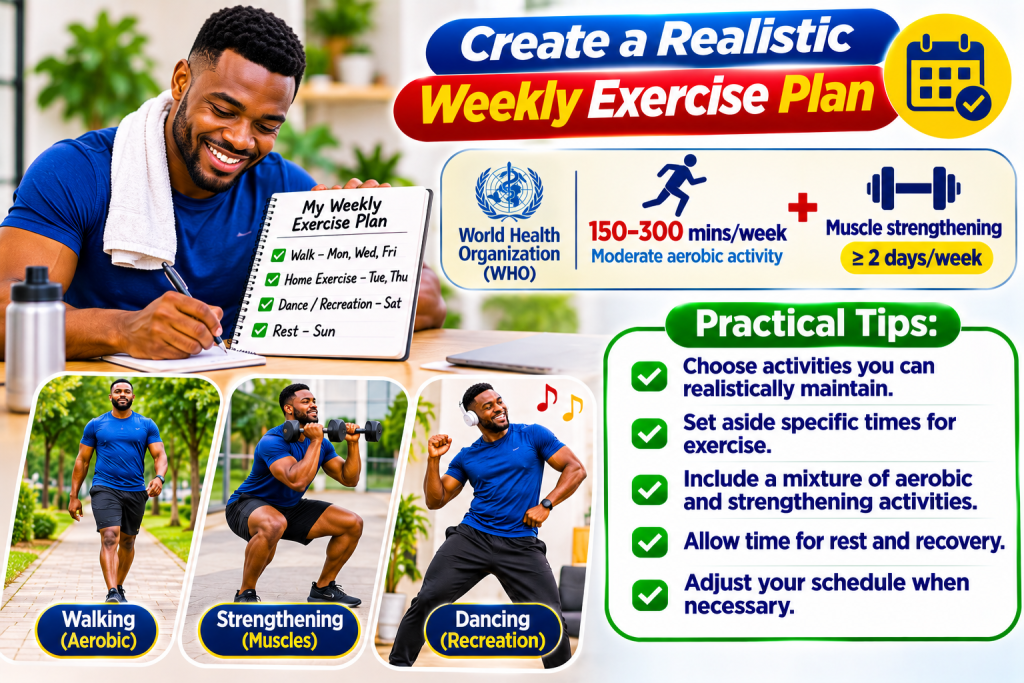
Having a simple exercise plan can help you organise your activities and remain consistent.
You do not need a complicated schedule. A realistic plan should consider your work responsibilities, family commitments, available time and current physical ability.
For example, you might walk on some days, perform home exercises on others and reserve time for dancing or recreational activities.
The World Health Organization recommends that adults aim for at least 150–300 minutes of moderate-intensity aerobic physical activity each week, or an equivalent amount of vigorous activity, where appropriate. Adults should also perform muscle-strengthening activities involving major muscle groups on at least two days each week.
These recommendations are general targets. Beginners can start with smaller amounts and gradually build up.
Practical tips:
- Choose activities you can realistically maintain.
- Set aside specific times for exercise.
- Include a mixture of aerobic and strengthening activities.
- Allow time for rest and recovery.
- Adjust your schedule when necessary.
A flexible plan is often easier to maintain than a demanding routine that does not fit your lifestyle.
8. Combine Exercise with Healthy Eating
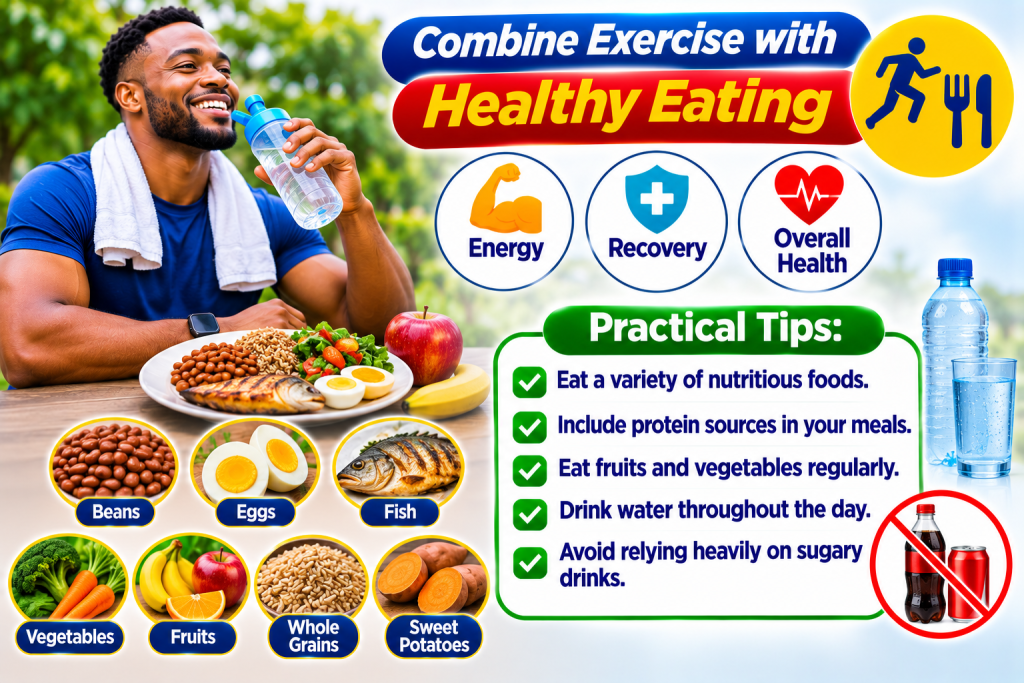
Physical activity and nutrition work together to support general health and fitness. Eating balanced meals provides the energy and nutrients required for movement, recovery and normal body functions.
You do not need expensive supplements or special fitness foods to support an active lifestyle. Everyday foods such as beans, eggs, fish, vegetables, fruits, whole grains and sweet potatoes can contribute to a balanced diet.
Drinking enough water is also important, particularly when exercising or spending time outdoors in hot weather.
Practical tips:
- Eat a variety of nutritious foods.
- Include protein sources in your meals.
- Eat fruits and vegetables regularly.
- Drink water throughout the day.
- Avoid relying heavily on sugary drinks.
Healthy eating should support your exercise routine rather than become a source of unnecessary pressure.
9. Get Enough Rest and Recovery
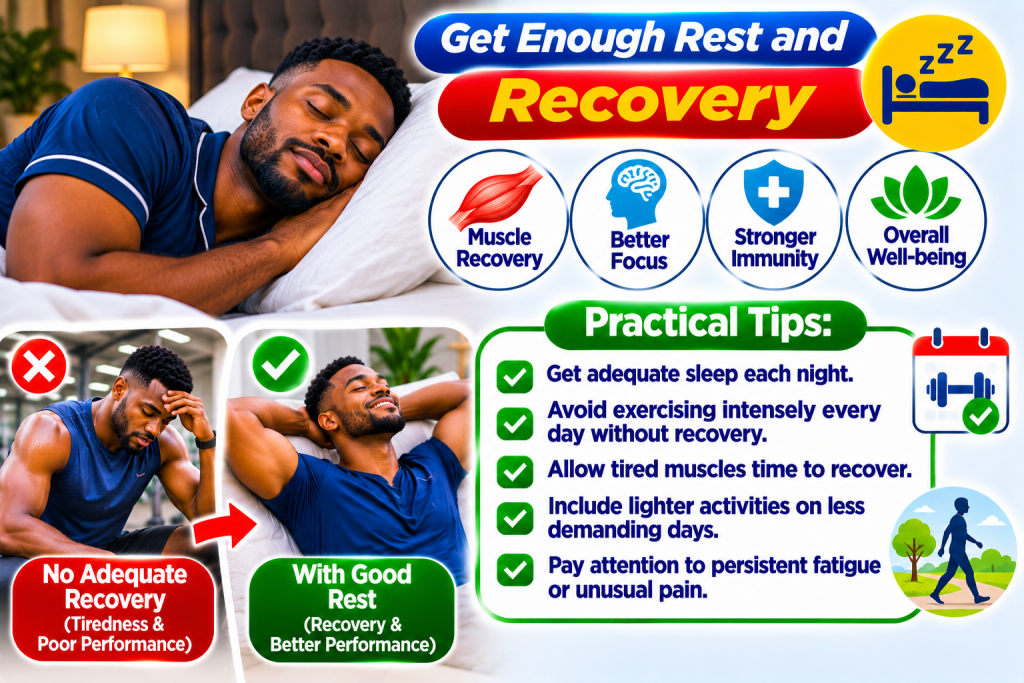
Exercise places demands on the body. Rest allows the body to recover and adapt to physical activity.
Without adequate recovery, you may experience excessive tiredness, reduced performance and difficulty maintaining your exercise routine.
Sleep is particularly important because it supports muscle recovery, concentration, immune function and general well-being.
Practical tips:
- Get adequate sleep each night.
- Avoid exercising intensely every day without recovery.
- Allow tired muscles time to recover.
- Include lighter activities on less demanding days.
- Pay attention to persistent fatigue or unusual pain.
Remember that rest is part of a healthy fitness routine. You do not need to exercise intensely every day to make progress.
10. Set Small Goals and Track Your Progress
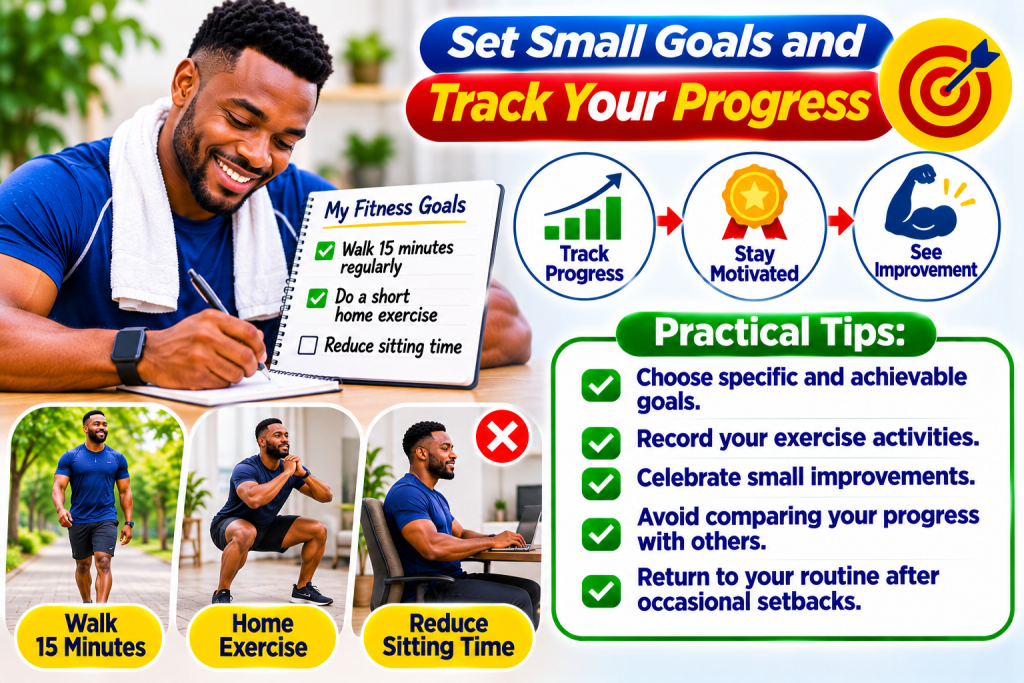
Fitness improvements usually happen gradually. Setting realistic goals can help you stay motivated and recognise your progress.
Instead of attempting to make several major changes at once, begin with one or two manageable targets.
For example, you could aim to walk for 15 minutes regularly, complete a short home exercise routine or reduce the amount of time you spend sitting.
As these habits become easier, you can gradually increase the challenge.
Practical tips:
- Choose specific and achievable goals.
- Record your exercise activities.
- Celebrate small improvements.
- Avoid comparing your progress with others.
- Return to your routine after occasional setbacks.
Your progress should be measured by your own improvements, not by how quickly someone else achieves their fitness goals.
11. Choose Activities That Match Your Ability
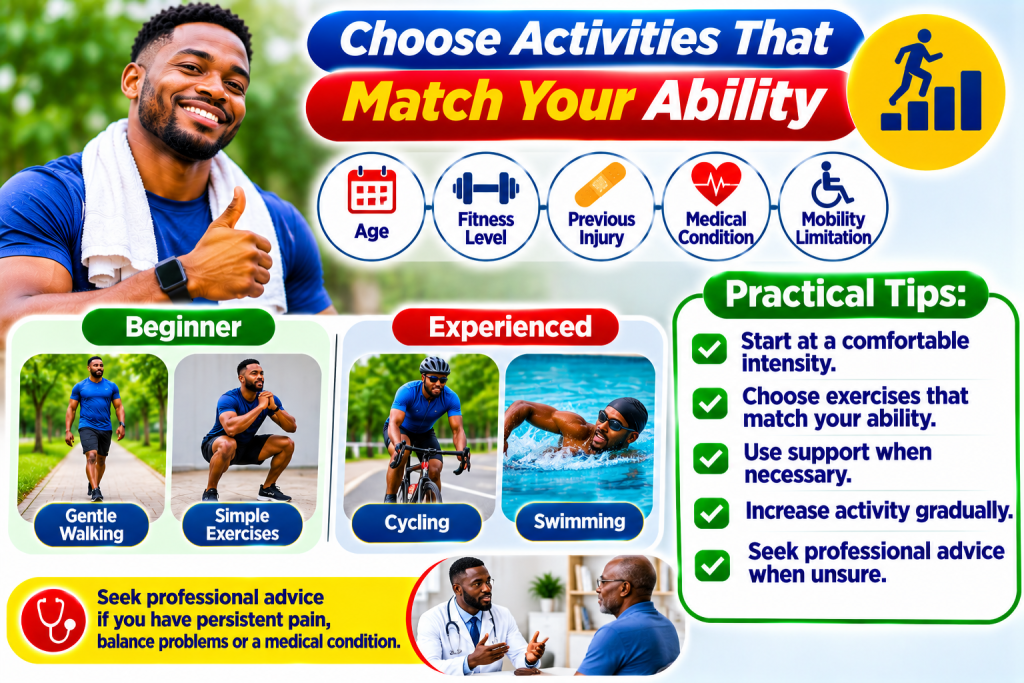
Not every exercise is suitable for every person. Age, physical fitness, previous injuries, medical conditions and mobility limitations can influence which activities are appropriate.
A beginner may benefit from gentle walking and simple bodyweight exercises, while someone with more experience may prefer cycling, swimming or more challenging workouts.
People with persistent pain, significant balance problems or medical conditions should seek appropriate professional guidance before beginning a new exercise programme.
Practical tips:
- Start at a comfortable intensity.
- Choose exercises that match your ability.
- Use support when necessary.
- Increase activity gradually.
- Seek professional advice when unsure about exercise safety.
The goal is to improve your fitness safely, not to push your body beyond its current limits.
Conclusion
Staying fit and active does not require an expensive gym membership or complicated exercise equipment. Simple activities such as walking, dancing, cycling, climbing stairs and performing home exercises can help improve physical fitness and support general health.
The most important step is to begin with activities that suit your lifestyle and gradually make them part of your daily routine. Combine regular movement with balanced nutrition, adequate sleep and sufficient recovery.
Do not become discouraged if progress seems slow. Building fitness is a gradual process, and occasional setbacks are normal.
Start with what you can manage today. A short walk, a few home exercises or a simple dance session can be the beginning of a healthier and more active lifestyle.
Remember: You do not need a gym to get moving. You need a starting point, consistency and the willingness to keep going.