
Introduction
Living a healthy life does not always require expensive gym memberships, complicated diets or major lifestyle changes. Sometimes, the most meaningful improvements begin with small actions repeated every day. Drinking enough water, eating nutritious meals, getting adequate sleep and making time for physical activity may seem simple, but these habits can have a significant impact on how we feel and function.
Many people want to improve their health but struggle to maintain healthy routines. Busy schedules, work responsibilities, financial pressures and everyday distractions can make it difficult to prioritise personal well-being. However, building a healthier lifestyle does not mean changing everything at once. It means making realistic choices that gradually become part of everyday life.
Healthy habits support more than physical fitness. They can improve mental well-being, increase energy, strengthen relationships and help people manage daily responsibilities more effectively. The important thing is to choose habits that are practical, sustainable and suitable for individual needs.
Here are 12 simple daily habits that can help you build a healthier and happier life.
1. Start Your Day with Enough Water

Water plays an important role in keeping the body functioning properly. It supports digestion, helps regulate body temperature, transports nutrients and maintains normal body functions.
After several hours of sleep, drinking water in the morning can be a simple way to begin your daily hydration routine. Throughout the day, make an effort to drink water regularly, especially when the weather is hot or you are physically active.
You do not need to follow complicated drinking schedules. Pay attention to your thirst, activity level and urine colour. Pale yellow urine is generally a useful sign of adequate hydration, although some medications and foods can affect its colour.
Practical tips:
- Keep a reusable water bottle nearby.
- Drink water with meals.
- Choose water more often than sugary drinks.
- Increase fluid intake when exercising or spending time outdoors.
People with certain medical conditions may need individual fluid recommendations from a healthcare professional.
2. Eat Balanced and Nutritious Meals
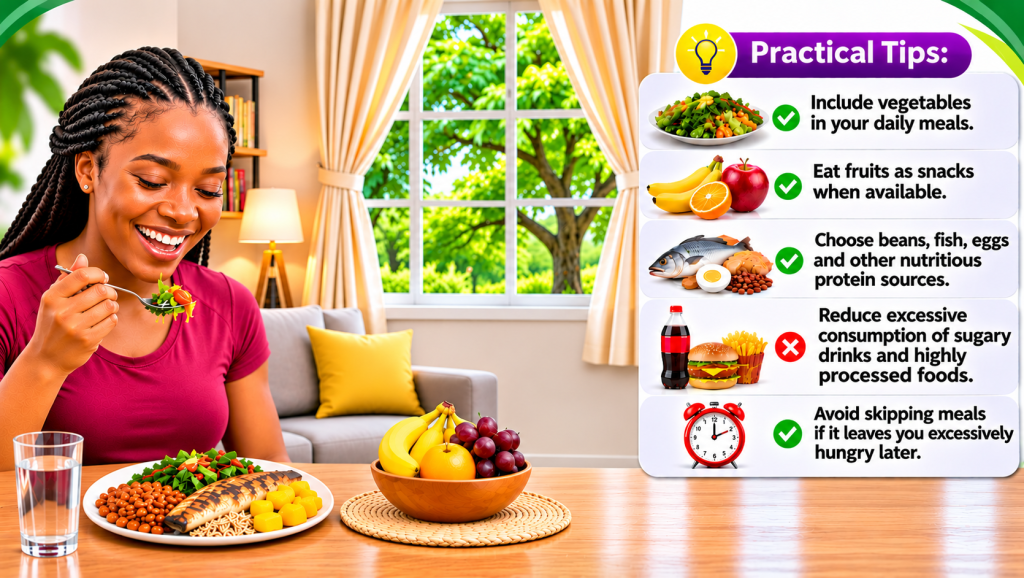
Food provides the energy and nutrients the body needs to function. A balanced diet supports growth, tissue repair, immunity and general health.
Try to include different food groups in your meals. Vegetables and fruits provide vitamins, minerals and fibre. Beans, eggs, fish, lean meat and other protein sources support muscle maintenance and tissue repair. Whole grains and other carbohydrate sources provide energy, while healthy fats support several important body functions.
Healthy eating does not mean avoiding every food you enjoy. It is about creating a reasonable balance and making nutritious choices more often.
Practical tips:
- Include vegetables in your daily meals.
- Eat fruits as snacks when available.
- Choose beans, fish, eggs and other nutritious protein sources.
- Reduce excessive consumption of sugary drinks and highly processed foods.
- Avoid skipping meals if it leaves you excessively hungry later.
You can eat healthily without buying expensive foods. Locally available options such as beans, vegetables, sweet potatoes, fruits, eggs and fish can form part of a nutritious diet.
3. Make Physical Activity Part of Your Routine

Regular physical activity is one of the most valuable habits for maintaining good health. It supports cardiovascular fitness, strengthens muscles and bones, improves balance and helps people maintain functional independence.
Exercise does not always require specialised equipment. Walking, dancing, cycling, gardening, swimming and home-based exercises are all possible ways to remain active.
Adults are generally encouraged to aim for at least 150 minutes of moderate-intensity aerobic activity each week, alongside muscle-strengthening activities on two or more days, where appropriate.
Practical tips:
- Take a short walk during breaks.
- Use the stairs when appropriate.
- Dance to your favourite music.
- Try simple home exercises.
- Reduce long periods of uninterrupted sitting.
Start at a comfortable level and gradually increase your activity. If you have a medical condition, persistent pain or movement difficulties, seek appropriate professional guidance before starting a new exercise programme.
4. Get Enough Quality Sleep

Sleep is essential for physical recovery, memory, concentration and emotional well-being. During sleep, the body carries out important processes that support tissue repair, immune function and brain health.
Adults generally need at least seven hours of sleep each night, although individual needs can vary.
Poor sleeping habits may contribute to daytime tiredness, difficulty concentrating, irritability and reduced productivity.
Practical tips:
- Go to bed and wake up at consistent times.
- Create a quiet and comfortable sleeping environment.
- Reduce caffeine intake late in the day.
- Avoid heavy meals close to bedtime.
- Limit screen use before sleeping.
If you regularly struggle to sleep or experience excessive daytime sleepiness, consider discussing the problem with a healthcare professional.
5. Learn to Manage Everyday Stress
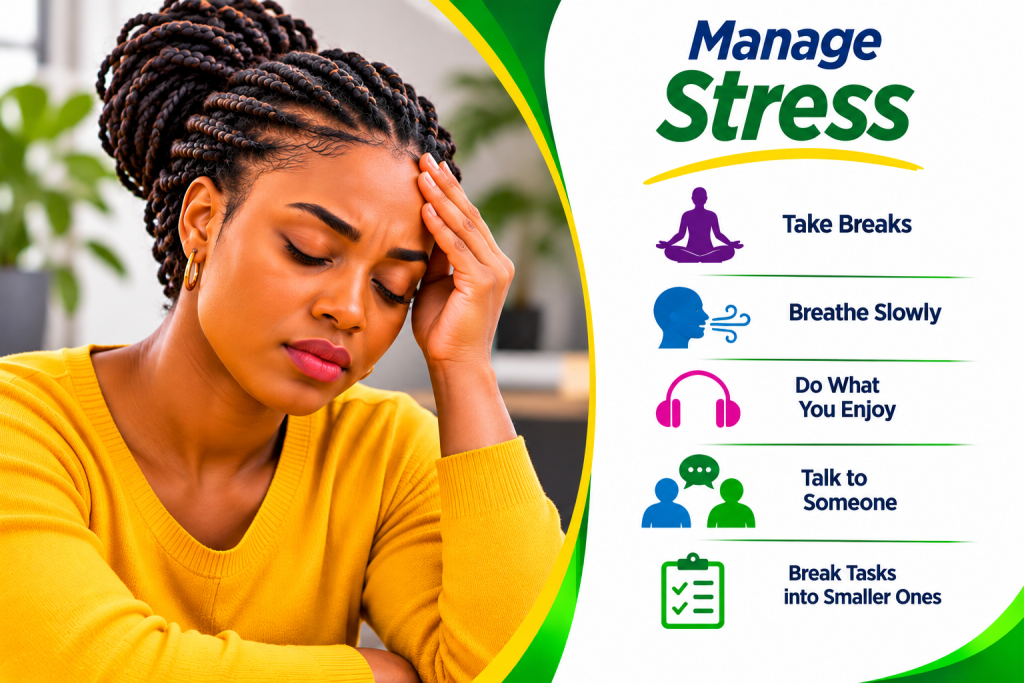
Stress is a normal response to challenging situations. However, prolonged or poorly managed stress can affect sleep, concentration, mood and general well-being.
Work pressure, financial difficulties, family responsibilities and personal challenges are common sources of stress. Although these situations cannot always be avoided, learning healthy ways to respond can make them easier to manage.
Practical tips:
- Take short breaks during demanding activities.
- Practise slow, controlled breathing.
- Spend time doing activities you enjoy.
- Talk to someone you trust.
- Break large responsibilities into smaller tasks.
You do not need to solve every problem immediately. Sometimes, taking a moment to pause and organise your thoughts can help you respond more effectively.
If stress becomes overwhelming or affects your ability to function, consider seeking support from a qualified mental health professional.
6. Maintain Good Personal Hygiene

Personal hygiene helps protect the body from infections and supports confidence and comfort. Simple routines such as bathing, washing hands, brushing teeth and wearing clean clothes contribute to everyday health.
Handwashing is particularly important because hands can carry germs from contaminated surfaces to the eyes, nose and mouth.
Practical tips:
- Wash your hands with soap and clean water.
- Brush your teeth twice daily with fluoride toothpaste.
- Bathe regularly.
- Keep fingernails clean.
- Wear clean clothes and maintain a clean living environment.
Good hygiene does not need to be complicated. Consistent attention to these basic practices can make a meaningful difference.
7. Take Care of Your Mental Health
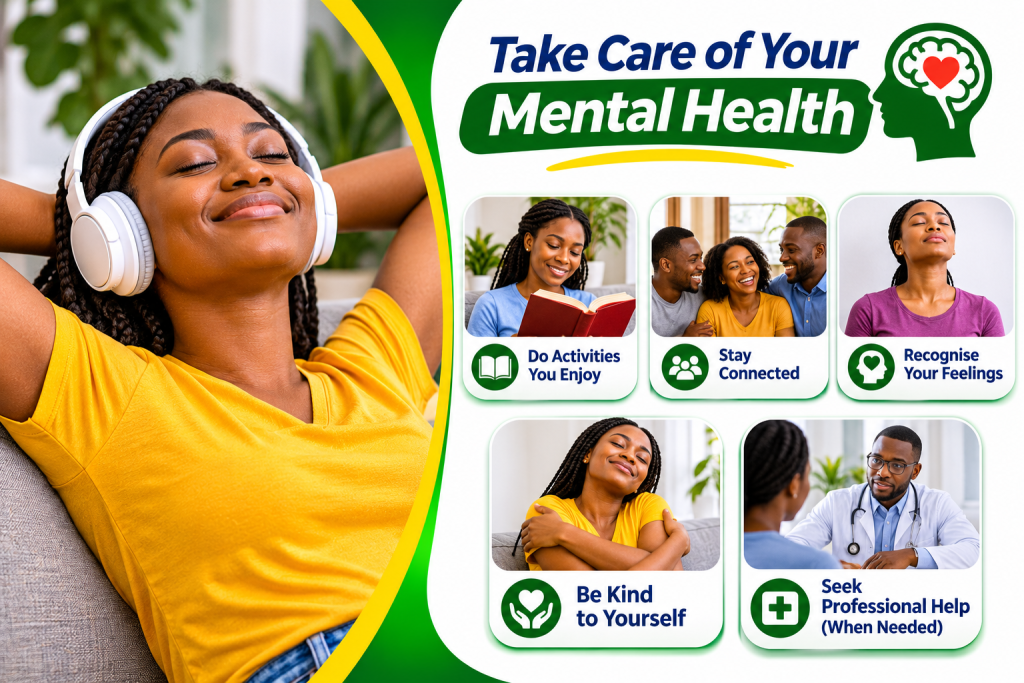
Mental health is an important part of overall well-being. It influences how people think, feel, communicate and respond to everyday experiences.
Taking care of your mental health involves recognising your emotions, managing challenges and seeking support when necessary.
Activities such as reading, listening to music, spending time with loved ones, practising relaxation and pursuing personal interests can support emotional well-being.
Practical tips:
- Make time for activities you enjoy.
- Avoid isolating yourself when you need support.
- Recognise when you are feeling overwhelmed.
- Practise self-compassion.
- Seek professional help when emotional difficulties persist.
Remember that taking care of your mental health is not a sign of weakness. It is an important part of maintaining a balanced and healthy life.
8. Build Healthy Relationships

Human relationships can influence emotional well-being and quality of life. Supportive relationships provide companionship, encouragement and a sense of belonging.
Maintaining healthy relationships requires communication, respect, understanding and patience. It also involves recognising personal boundaries and treating others with consideration.
Practical tips:
- Make time for family and friends.
- Listen when others are speaking.
- Communicate your feelings respectfully.
- Offer support when someone needs help.
- Maintain boundaries in difficult relationships.
Healthy relationships do not require constant agreement. They require mutual respect and a willingness to understand one another.
9. Reduce Excessive Screen Time

Digital devices have become an important part of modern life. Phones, computers and televisions help people work, communicate, learn and access information.
However, spending excessive time on screens can interfere with sleep, physical activity and face-to-face interaction. Long periods of sitting while using digital devices may also contribute to neck, shoulder and back discomfort.
Practical tips:
- Take regular breaks from screens.
- Avoid unnecessary phone use before bedtime.
- Spend time on outdoor activities.
- Adjust your sitting position when using a computer.
- Make time for activities that do not involve digital devices.
The goal is not to avoid technology completely. It is to develop a healthier relationship with it.
10. Make Time for Rest and Recreation

A healthy lifestyle is not only about work, exercise and responsibilities. Rest and enjoyable activities are also important.
People who constantly push themselves without allowing time for recovery may experience exhaustion and reduced motivation. Recreation provides opportunities to relax, express creativity and reconnect with personal interests.
You could spend time reading, playing football, listening to music, cooking, travelling or enjoying a hobby.
Practical tips:
- Schedule short periods of rest.
- Pursue activities that make you happy.
- Avoid filling every hour with responsibilities.
- Take breaks when you feel physically or mentally tired.
Rest should be viewed as part of a healthy routine rather than a reward that must always be earned.
11. Be Consistent and Set Realistic Goals
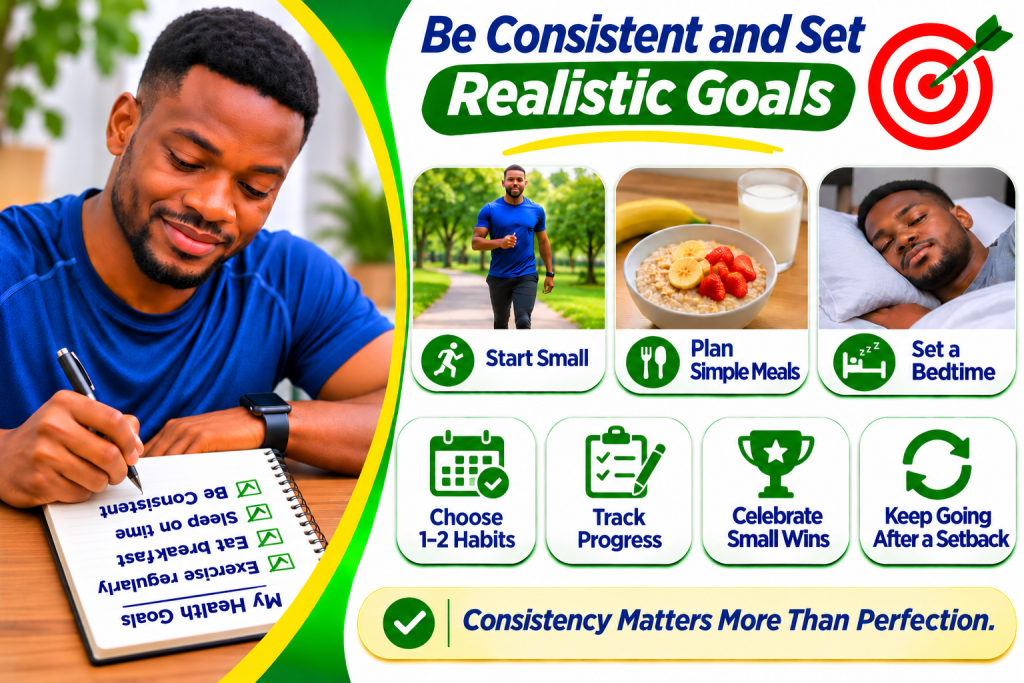
Building healthy habits takes time. Many people become discouraged because they expect immediate results or attempt to change too many things at once.
A more effective approach is to begin with small, manageable goals and gradually develop them into routines.
For example, if you rarely exercise, begin with a short daily walk. If you frequently skip breakfast, plan simple meals ahead of time. If you sleep late, gradually establish a more consistent bedtime.
Practical tips:
- Choose one or two habits to improve first.
- Set goals that fit your daily schedule.
- Track your progress.
- Celebrate small improvements.
- Do not give up because of an occasional setback.
Consistency is more important than perfection. A missed day does not mean you have failed. You can simply return to your routine.
Conclusion
A healthier and happier life is often built through small decisions made consistently. Drinking enough water, eating balanced meals, staying physically active, sleeping well and taking care of mental health are simple practices that can support long-term well-being.
You do not need to change your entire lifestyle overnight. Begin with one habit that feels achievable, practise it regularly and introduce additional changes as you become more comfortable.
Remember that healthy living is not about following a perfect routine or comparing yourself with others. It is about making informed choices that support your individual needs and improve your quality of life.
Start small, remain consistent and give yourself time to grow. Your everyday habits can become the foundation for a healthier future.