
Introduction
Looking stylish does not always mean wearing expensive clothes or following every fashion trend. Sometimes, the most attractive outfits are created with simple clothing, good colour combinations and a little creativity. You do not need a wardrobe filled with designer labels to look presentable, confident and fashionable.
Many people want to improve their appearance but feel limited by their budgets. Rising clothing prices, changing trends and the pressure to keep up with social media can make fashion seem expensive. However, dressing well is more about making thoughtful choices than spending large amounts of money.
A well-planned wardrobe can help you create several attractive outfits from a few carefully selected pieces. By understanding your personal style, choosing versatile clothing and taking proper care of your outfits, you can look good without putting unnecessary pressure on your finances.
Whether you are a student, young professional, business owner or someone who simply enjoys looking good, there are practical ways to improve your style while spending wisely.
1. Understand Your Personal Style

Before buying new clothes, take time to understand the kind of appearance you want to create. Personal style is the combination of clothing, colours, accessories and designs that reflect your personality.
Some people prefer simple and comfortable outfits, while others enjoy colourful clothing and bold patterns. Some prefer formal dressing, whereas others feel more comfortable in casual outfits.
There is no single fashion style that everyone must follow.
Start by examining the clothes you already own. Identify the pieces you enjoy wearing and the outfits that make you feel comfortable and confident. You can also collect inspiration from fashion magazines, websites and social media.
However, avoid copying every outfit you see. An outfit that looks attractive on another person may not suit your preferences, lifestyle or budget.
The goal is to develop a style that feels natural to you.
2. Build a Wardrobe Around Essential Clothing
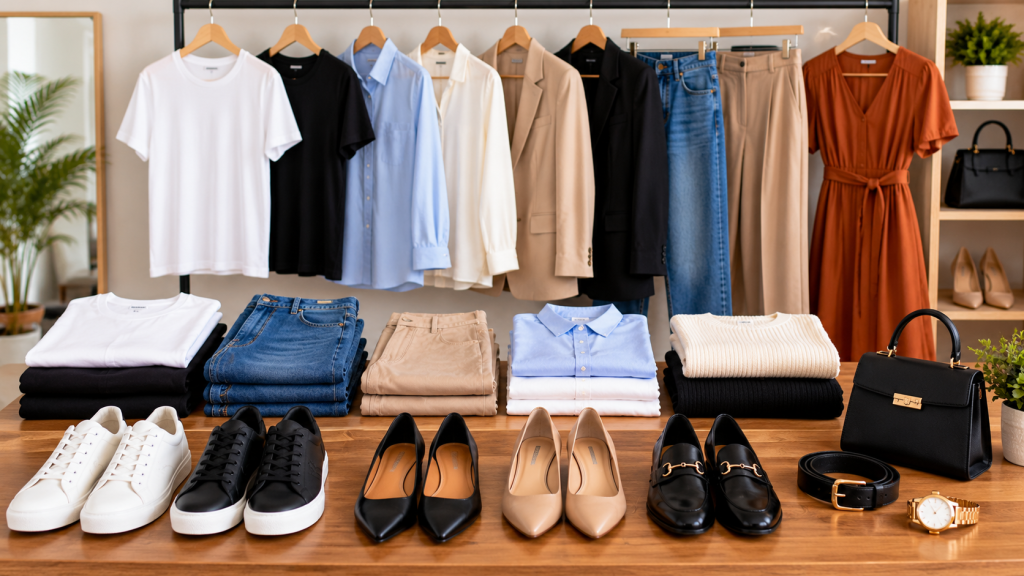
One of the smartest ways to save money on fashion is to invest in essential clothing that can be combined in different ways.
These are sometimes called wardrobe basics. They are simple pieces that remain useful across different seasons and occasions.
Some useful wardrobe essentials include:
- Plain white and black T-shirts.
- Well-fitted jeans.
- Neutral-coloured trousers.
- Simple shirts and blouses.
- A comfortable pair of sneakers.
- Classic flat shoes or formal footwear.
- A versatile jacket.
- A simple dress.
- A few comfortable everyday outfits.
The advantage of these items is that they can be mixed and matched to create different looks.
For example, a white shirt can be worn with jeans for a relaxed appearance or paired with formal trousers for a professional setting. A black pair of trousers can work with several shirts, blouses and jackets.
Rather than purchasing many clothes that serve the same purpose, focus on pieces that offer several styling possibilities.
3. Choose Clothes That Fit Properly

The way clothing fits your body can make a significant difference to your overall appearance.
Even an inexpensive outfit can look attractive when it fits properly. On the other hand, expensive clothing may look uncomfortable or untidy when the fit is poor.
When shopping, pay attention to the shoulders, waist, sleeves, trouser length and overall comfort of each item.
Clothing should allow you to move comfortably without appearing excessively tight or unnecessarily loose, unless the oversized look is an intentional part of your style.
You do not always need to purchase new clothes to achieve a better fit. Sometimes, a simple adjustment by a tailor can improve an outfit considerably.
For example, shortening trousers, adjusting a shirt or taking in a loose dress can make an existing item look more polished.
Good fit is one of the simplest ways to improve your appearance without spending heavily.
4. Learn How to Combine Colours
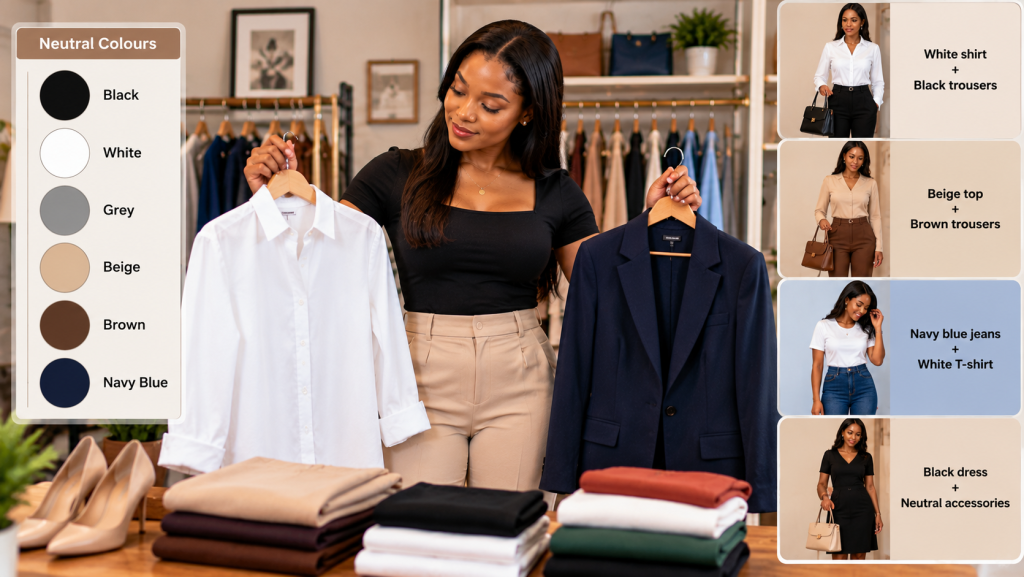
Colour coordination is an important part of dressing well.
You do not need professional fashion training to combine colours successfully. Start with neutral shades such as black, white, grey, beige, brown and navy blue. These colours are generally easy to combine with other shades.
For example:
- A white shirt with black trousers creates a clean appearance.
- A beige top with brown trousers gives a warm, coordinated look.
- Navy blue jeans with a white T-shirt create a simple casual outfit.
- A black dress with neutral accessories can look elegant.
You can gradually introduce brighter colours when you become more confident.
Another useful approach is to choose one dominant colour and combine it with one or two complementary shades. This helps prevent an outfit from looking unnecessarily busy.
Remember that colour coordination is not about following strict rules. It is about creating a balanced appearance that suits your personality.
5. Shop With a Plan

Shopping without a plan can lead to unnecessary spending. You may purchase clothing because it looks attractive in a store, only to discover later that it does not match anything in your wardrobe.
Before shopping, examine what you already own and identify the items you genuinely need.
Create a short shopping list and set a spending limit. This helps you focus on useful purchases instead of buying clothes simply because they are on sale.
It is also helpful to compare prices across different shops. Local clothing stores, markets, online retailers and second-hand clothing shops may offer different prices for similar items.
In Nigeria, markets and second-hand clothing stores can provide affordable options. However, examine the quality, stitching, zips, buttons and fabric before making a purchase.
A low price is not necessarily a good deal if the clothing becomes damaged after a few uses.
6. Invest in Quality Where It Matters

Dressing well on a budget does not mean choosing the cheapest available clothing every time.
Some wardrobe items are worth spending a little more on because they are used frequently. Shoes, everyday trousers, work shirts and jackets are examples of pieces that may benefit from better construction.
Check the fabric, seams, buttons and general finishing before purchasing an item.
Clothing made from durable materials can remain useful for longer when properly maintained. This may save money over time because you will not need to replace those items frequently.
However, expensive does not always mean better quality. Compare the actual construction and comfort rather than relying only on the brand name or price tag.
7. Use Accessories to Improve Simple Outfits

Accessories can transform an ordinary outfit without requiring you to purchase an entirely new wardrobe.
A simple wristwatch, belt, necklace, handbag, scarf or pair of sunglasses can add character to your appearance.
For example, a plain shirt and trousers can look more polished when combined with a suitable belt and clean footwear. A simple dress can also take on a different appearance with a necklace or handbag.
The key is moderation.
Wearing too many accessories at once can make an outfit look crowded. Choose a few items that complement your clothing rather than compete with it.
You should also consider the occasion. Accessories suitable for a casual outing may not be appropriate for a formal business meeting.
8. Take Proper Care of Your Clothes

Maintaining your clothing is an important part of having a stylish wardrobe.
Even good-quality clothes can lose their appearance when they are poorly maintained. Regular washing, proper drying, careful ironing and appropriate storage can help clothing remain attractive.
Always check washing instructions before cleaning an item. Some fabrics require gentle washing, while others may need special care.
Avoid overcrowding your wardrobe because this can cause unnecessary creasing. Fold clothes that are better stored that way and hang items that need to maintain their shape.
Repair small problems early. A loose button, minor tear or damaged seam can often be fixed before the problem becomes worse.
Clean shoes regularly and store accessories properly.
Taking care of your clothes protects the money you have already spent.
9. Dress Appropriately for Different Occasions

Being fashionable also means understanding what is appropriate for different environments.
Clothing for work may be different from what you wear to a wedding, religious gathering, casual outing or sporting activity.
For professional environments, clean shirts, well-fitted trousers, modest dresses and suitable footwear can create a polished appearance.
For casual occasions, comfortable jeans, T-shirts, simple dresses and sneakers may be more appropriate.
For special events, you can choose more distinctive clothing while considering the dress code, weather and nature of the occasion.
You do not need a completely separate wardrobe for every activity. Many basic clothing items can be styled differently depending on the occasion.
The important thing is to look neat, comfortable and appropriately dressed.
10. Avoid the Pressure to Follow Every Fashion Trend

Fashion trends change constantly. A particular colour, shoe design or clothing style may become popular today and disappear from attention a few months later.
Trying to follow every trend can become expensive and exhausting.
Instead, choose trends that genuinely suit your personality and existing wardrobe. You can introduce a fashionable item occasionally without replacing all your clothes.
For example, if a particular shoe style becomes popular, consider whether it will work with the clothing you already own. If it does, it may be a worthwhile purchase. If not, you may be better off saving your money.
Your personal style should not depend entirely on what is popular on social media.
Confidence comes from wearing clothing that makes you feel comfortable and reflects who you are.
11. Make Use of What You Already Own
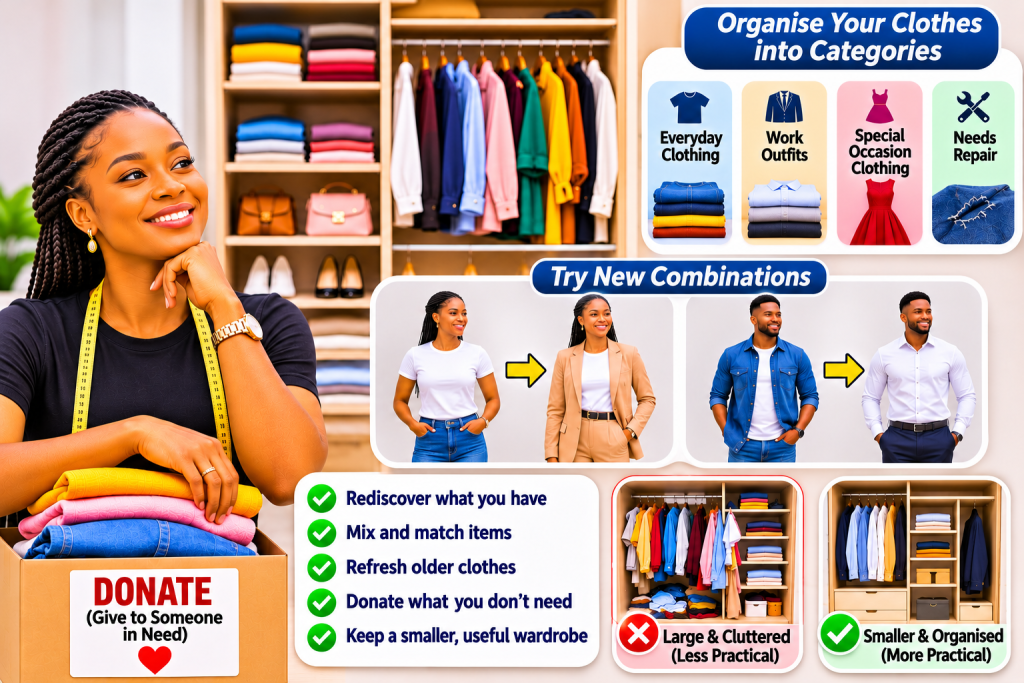
Sometimes, the best way to improve your wardrobe is to rediscover the clothes you already have.
Take everything out of your wardrobe and organise the items into categories. Separate everyday clothing, work outfits, special occasion clothing and items that need repair.
Try combining pieces you have not worn together before. You may discover new outfits without spending anything.
You can also refresh older clothing by changing how you style it. A shirt that was previously worn casually may work with formal trousers, while an old pair of jeans may look different with a new top and suitable footwear.
If you have clothes that no longer fit or serve a purpose, consider donating them or passing them on to someone who can use them.
A smaller wardrobe with useful clothing can be more practical than a large collection of items you rarely wear.
Conclusion
Dressing well on a budget is possible when you understand your personal style, make thoughtful purchases and take proper care of your clothing.
You do not need expensive designer labels to look attractive. A few well-fitted wardrobe essentials, coordinated colours, suitable accessories and clean footwear can help you create several stylish outfits.
Most importantly, avoid allowing fashion trends or social pressure to control your spending. Your appearance should reflect your personality, comfort and lifestyle rather than the price of your clothes.
Start with what you already own, identify what you genuinely need and make gradual improvements. With a little planning and creativity, you can build a wardrobe that looks good, feels comfortable and supports your financial goals.
Remember: Great style is not measured by how much you spend, but by how well you wear what you have.