
Starting a small business can be an exciting way to earn money, develop your skills and become financially independent. However, one of the biggest challenges many aspiring entrepreneurs face is limited capital. Some people have good business ideas but believe they must have a large amount of money before they can begin.
The truth is that you do not always need a large investment to start a business. Many successful businesses begin with simple ideas, careful planning and a willingness to grow gradually. What matters is choosing the right business, understanding your customers and managing the resources available to you.
Whether you want to sell products, provide services or turn a personal skill into a source of income, starting small can help you reduce financial risks while gaining valuable experience.
Here are practical steps to help you start a small business with limited capital.
1. Choose a Business That Matches Your Skills

One of the best ways to start a business with little money is to build on skills you already have. Learning an entirely new trade may require additional training, equipment and expenses. However, using an existing skill can reduce your starting costs.
Think about activities you enjoy and tasks people often ask you to help with. You may be good at cooking, baking, sewing, graphic design, writing, teaching, photography, hair styling or repairing household items.
For example, someone who enjoys cooking could begin by preparing meals for a small number of customers. A person with graphic design skills could offer simple design services to local businesses. Someone who understands fashion could begin by selling selected clothing items.
Practical tips:
- Identify your strongest skills and interests.
- Consider problems you can solve for other people.
- Choose something you can start with the resources available to you.
- Avoid spending money on training you do not immediately need.
A business built around your existing abilities can be easier and less expensive to establish.
2. Identify a Problem People Are Willing to Pay to Solve
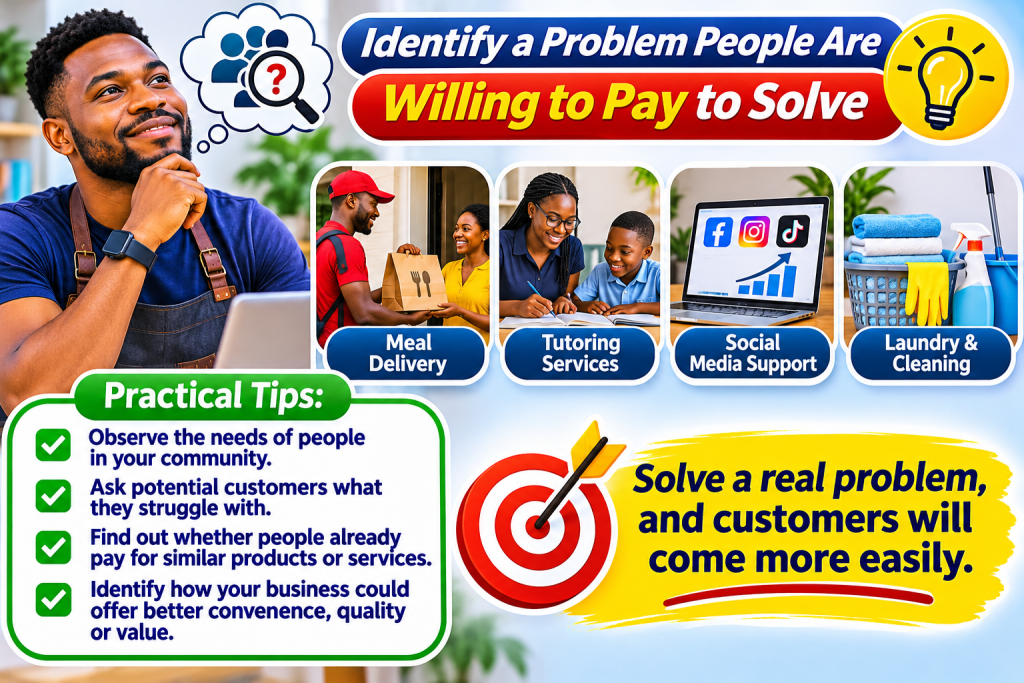
A good business does more than sell products or services. It provides something people need or value.
Before choosing a business idea, observe the people around you. Pay attention to common problems, unmet needs and services that are difficult to access.
For example, busy workers may need affordable meal delivery. Parents may need reliable tutoring services for their children. Small businesses may need help managing their social media pages. People in your neighbourhood may need laundry, cleaning or delivery services.
The important thing is to identify a genuine demand rather than starting a business simply because someone else is making money from it.
Practical tips:
- Observe the needs of people in your community.
- Ask potential customers what they struggle with.
- Find out whether people already pay for similar products or services.
- Identify how your business could offer better convenience, quality or value.
When your business solves a real problem, attracting customers becomes easier.
3. Start with a Simple Business Plan

You do not need an expensive business consultant to prepare your first business plan. A simple document that explains what you want to do and how you intend to operate can be enough to guide your early decisions.
Your plan should describe the product or service you want to offer, the customers you intend to serve, your estimated starting expenses and how you expect to make money.
For example, if you want to start a small food business, your plan could include the meals you will prepare, ingredient costs, packaging expenses, selling prices and delivery arrangements.
A business plan also helps you identify possible challenges before investing your money.
Practical tips:
- Write down your business idea.
- Identify your target customers.
- List the materials and equipment you need.
- Estimate your startup and operating costs.
- Decide how you will attract customers.
- Set realistic short-term goals.
Keep your plan simple at first. You can improve it as your business develops.
4. Calculate Your Starting Costs Carefully
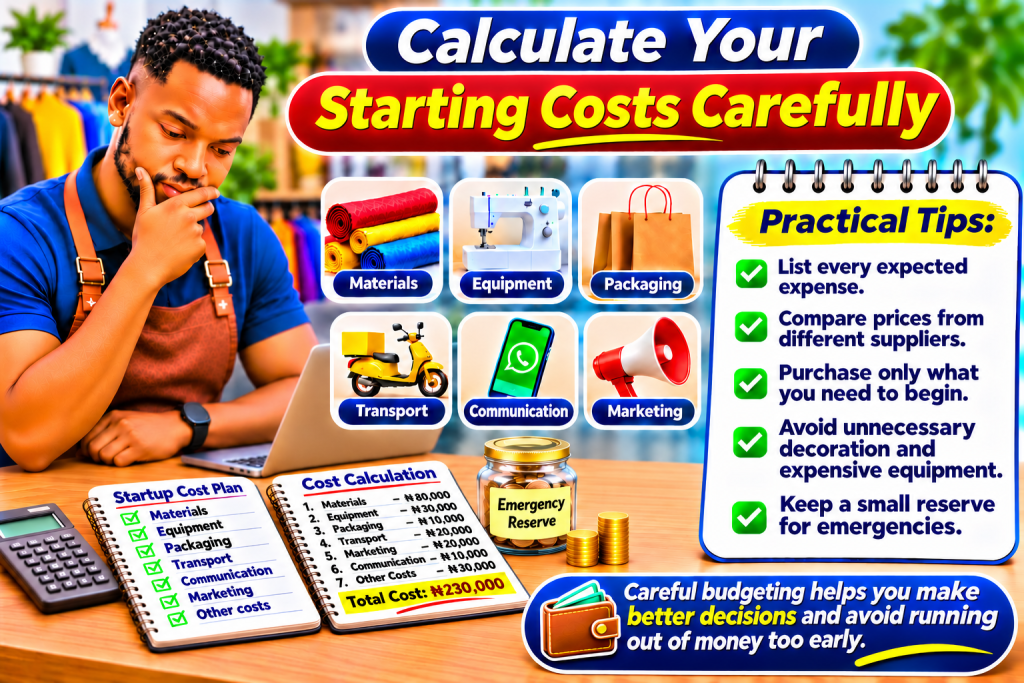
One common mistake new entrepreneurs make is spending money without understanding how much they actually need to begin.
Before purchasing anything, prepare a list of essential expenses. These may include materials, equipment, packaging, transportation, communication, marketing and other operating costs.
Separate essential expenses from items that can be purchased later.
For example, someone starting a small clothing business may need a few selected products, suitable packaging and a way to communicate with customers. Renting an expensive shop or purchasing large quantities of stock may not be necessary at the beginning.
It is also wise to keep a small amount aside for unexpected expenses.
Practical tips:
- List every expected expense.
- Compare prices from different suppliers.
- Purchase only what you need to begin.
- Avoid unnecessary decoration and expensive equipment.
- Keep a small reserve for emergencies.
Careful budgeting helps you make better decisions and reduces the risk of running out of money too early.
5. Start Small and Grow Gradually

You do not need to launch a large business immediately. Starting with a small number of products or customers can help you understand the market without taking unnecessary financial risks.
For example, instead of opening a full restaurant, you could begin by preparing meals for customers who place orders in advance. Instead of renting a large shop, you could sell selected products online or through an existing social network.
Starting small also gives you the opportunity to test your idea. You can discover which products customers prefer, what prices they are comfortable paying and what improvements are necessary.
Practical tips:
- Begin with a manageable quantity of products.
- Accept a limited number of orders initially.
- Test your business idea before expanding.
- Use customer feedback to improve your service.
- Increase production or stock when demand becomes consistent.
Growth should follow evidence of demand rather than pressure to appear successful.
6. Use Social Media to Promote Your Business

Social media provides an affordable way to introduce your business to potential customers. Platforms such as Facebook, Instagram, TikTok and WhatsApp can help small business owners display products, communicate with customers and share updates.
You do not need to pay for expensive advertisements immediately. You can begin by creating clear product photographs, writing simple descriptions and sharing useful information about your services.
For example, a baker can post pictures of available cakes, prices and ordering information. A fashion seller can share photographs of available clothing. A service provider can explain the problems they help customers solve.
Consistency and clear communication are important.
Practical tips:
- Create a business profile where appropriate.
- Use clear and attractive product photographs.
- Display accurate prices and contact information.
- Respond politely to customer enquiries.
- Share customer reviews with their permission.
- Post regularly without overwhelming your audience.
Remember that social media should help customers understand what you offer and how they can purchase it.
7. Manage Your Money Properly

Good financial management is important for every business, regardless of its size. A business may attract many customers and still struggle if the owner does not understand how money enters and leaves the business.
One important practice is to separate business money from personal spending. Mixing the two can make it difficult to know whether your business is making a profit.
Keep records of sales, expenses, debts, purchases and payments received. You can use a notebook, spreadsheet or simple accounting application.
For example, if you sell a product for ₦10,000, that amount is not necessarily your profit. You must first account for the cost of purchasing or producing the product, transportation, packaging and other expenses.
Practical tips:
- Record every business transaction.
- Separate personal and business funds.
- Calculate your actual costs before setting prices.
- Avoid spending all your business income.
- Review your financial records regularly.
Understanding your finances helps you identify problems early and make informed decisions.
8. Find Affordable and Reliable Suppliers
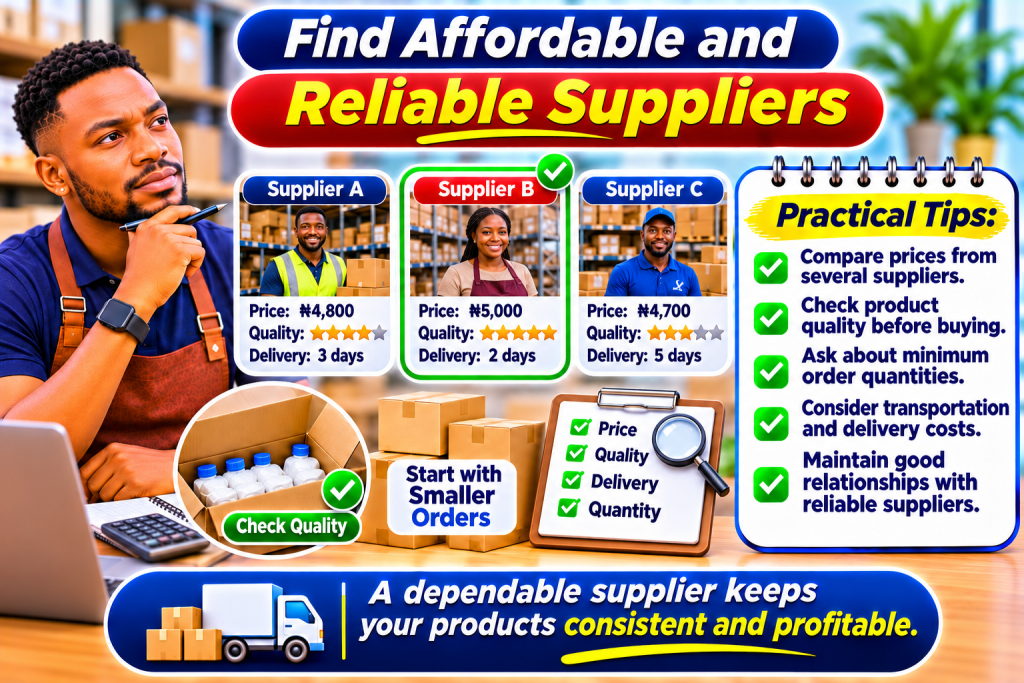
If your business involves selling products, finding dependable suppliers is important. The price and quality of the materials or goods you purchase can affect your profit and customer satisfaction.
Compare different suppliers before making major purchases. Consider product quality, delivery costs, payment arrangements and reliability rather than choosing a supplier based only on the lowest price.
You can also begin with smaller orders to test product quality before committing more money.
Practical tips:
- Compare prices from several suppliers.
- Check product quality before purchasing.
- Ask about minimum order quantities.
- Consider transportation and delivery costs.
- Maintain good relationships with reliable suppliers.
A dependable supplier can help your business maintain consistent quality and avoid unnecessary losses.
9. Build Good Relationships with Customers

Customers are important to the survival of any small business. People are more likely to return when they receive good service, fair treatment and products that meet their expectations.
You should treat customers with respect, communicate clearly and handle complaints professionally. If a mistake occurs, acknowledge it and try to provide a reasonable solution.
Avoid making promises you cannot fulfil. Honest communication builds trust and can encourage customers to recommend your business to others.
Practical tips:
- Respond to enquiries politely.
- Deliver products and services as promised.
- Listen to customer feedback.
- Resolve complaints fairly.
- Thank customers for their support.
- Maintain consistent product or service quality.
Good customer relationships can become one of your most valuable business assets.
10. Avoid Unnecessary Debt and Spending

When starting a business with limited capital, it is important to be careful about borrowing money. Loans can sometimes provide useful support, but repayment obligations may create pressure, particularly when a new business has not yet developed a steady income.
Avoid borrowing large amounts simply to make your business look impressive. Expensive offices, vehicles, decorations and equipment may not be necessary during the early stages.
Focus on activities that directly support production, service delivery and customer satisfaction.
If borrowing becomes necessary, understand the interest rate, repayment schedule and possible consequences before accepting the loan.
Practical tips:
- Avoid unnecessary purchases.
- Do not borrow more than you can reasonably repay.
- Compare financing options carefully.
- Reinvest a portion of your profits when possible.
- Prioritise essential business expenses.
Financial discipline can help protect your business during its early stages.
11. Understand the Legal Requirements for Your Business
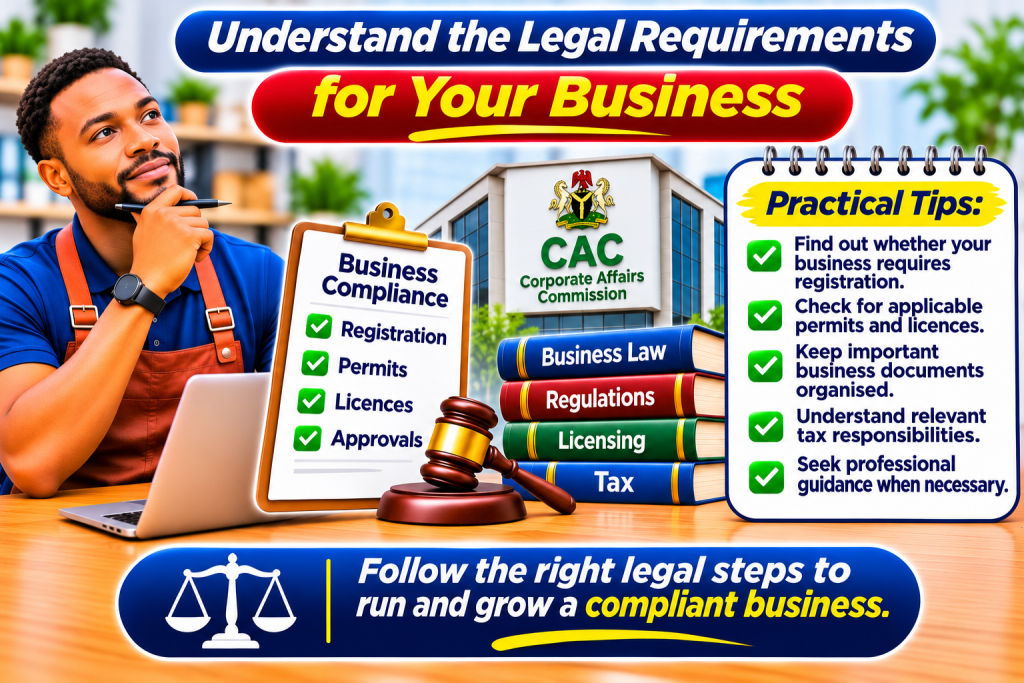
Starting a business also involves understanding the rules that apply to the type of activity you want to undertake.
Depending on your location and business sector, you may need registration, permits, licences or approval from relevant authorities. Certain businesses, particularly those involving food, healthcare, financial services or regulated products, may have additional requirements.
In Nigeria, entrepreneurs can obtain information about business registration through the Corporate Affairs Commission (CAC). Other requirements may depend on the nature and location of the business.
Do not assume that every business has the same registration or licensing requirements. Check the relevant official guidance before beginning regulated activities.
Practical tips:
- Find out whether your business requires registration.
- Check for applicable permits and licences.
- Keep important business documents organised.
- Understand relevant tax responsibilities.
- Seek professional guidance when necessary.
Taking care of legal requirements can help you avoid preventable difficulties as your business grows.
12. Be Patient, Consistent and Ready to Improve

A new business may not become profitable immediately. It takes time to understand customers, improve products, build trust and develop a reliable income.
You may experience slow sales, unexpected expenses or mistakes. These challenges do not automatically mean your business idea is unsuccessful. They can provide useful lessons about what needs to change.
Review your progress regularly. Identify the products customers prefer, the expenses that can be reduced and the services that need improvement.
Practical tips:
- Set realistic monthly targets.
- Monitor your sales and expenses.
- Learn from customer feedback.
- Improve your products and services.
- Avoid comparing your beginning with another person’s success.
- Remain flexible when circumstances change.
Consistency, patience and the willingness to learn can help you build a stronger business over time.
Conclusion
Starting a small business with limited capital is possible when you make careful decisions and use available resources wisely. You do not need to begin with a large shop, expensive equipment or a long list of products. A useful skill, a clear business idea, proper planning and an understanding of customer needs can provide a practical starting point.
Begin by identifying a problem you can solve, calculating your essential expenses and testing your idea on a manageable scale. Promote your products or services using affordable methods, maintain good customer relationships and keep accurate financial records.
Most importantly, avoid rushing into expansion. Allow your business to grow as customer demand and financial stability improve.
Remember, the goal is not simply to start a business. It is to build something useful, sustainable and capable of growing over time. Start with what you have, learn as you go and improve one step at a time.